



*The department’s main program is in the process of being relaunched with a new design and even more updated goals. Details will be announced soon.
Program’s Head: Xypolias Paraskevas
Program Objectives
General Information
The Master of Science (MSc) program in “Applied Geosciences” aims to train new specialized scientists from Departments of Geology as well as related scientific disciplines. It seeks to provide high-level postgraduate studies in cutting-edge topics within the Geosciences. The program’s specializations have been selected to provide focused postgraduate expertise, covering a significant range of relevant subjects while meeting the needs of the economy, society, and sustainable development.
The MSc “Applied Geosciences” leads exclusively to the award of a Master of Science (MSc) degree in the following specializations:
The specialization includes:
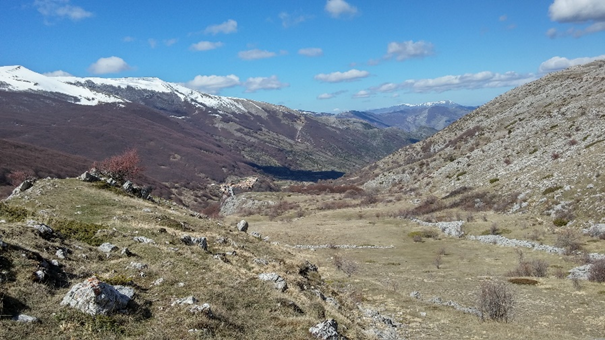
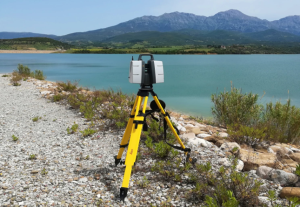
Modern Mapping: Utilization of digital tools (GIS, Mapping apps, Drones) to create 3D geological models.
Field Analysis: Data collection techniques for the stratigraphy, tectonic structure, and petrological characteristics of an area.
Applied Research: Linking field data to engineering projects (e.g., tunnels, dams), raw material exploration, and environmental protection.

The specialization “Applied Environmental Geology and Geohazards” focuses on understanding, preventing, and managing geohazards and environmental issues using modern scientific and technological methods. Its goal is to train specialized scientists capable of contributing to the early detection of geohazards, the protection of the natural and built environment from them, as well as geotechnical and seismic research. At the same time, the track integrates principles of sustainable development through the management and protection of surface and groundwater resources, adaptation to climate variability, and contribution to sound environmental planning. By combining theoretical training and practical application, it prepares graduates for a dynamic professional career in the field of applied geosciences and environmental problem management.
In brief, itincludes:

The specialization “MINERAL RESOURCES MANAGEMENT FOR SUSTAINABLE DEVELOPMENT” is aimed at young professionals in the technical world—scientists and engineers—as well as professionals wishing to operate and deepen their expertise in the field of prospecting, evaluating, and developing Mineral Raw Materials based on the principles of Sustainable and Circular Economy.
The program focuses on linking fundamental geoscientific knowledge—for the characterization and utilization of energy, metallic, and industrial minerals and rocks, as well as their anthropogenic derivatives—with modern tools and best management practices. This covers the requirements of both research and technological centers, as well as entities within the extractive or manufacturing industry.
The specialization also includes subjects related to Planetary Geology, Archaeometry, Gemology, and Health and Safety, aiming to contribute to the dissemination of relevant expertise and to professionally prepare a new generation of scientists by expanding their employment opportunities.

In this way, the MSc program will serve as an essential asset for:
a. The acquisition of in-depth knowledge by postgraduate students in mineral resources, geohazards, engineering projects, the environment, field research, and the use of modern technologies, while promoting scientific excellence, research, and the cultivation of leadership potential.
b. The expansion and promotion of theoretical and applied knowledge in the specific subjects of the MSc through the courses offered by the Curriculum and the students’ research-based Master’s Thesis, respectively.
c. The training of scientists capable of pursuing doctoral studies in related scientific fields.
d. The preparation and training of specialized and competent scientists and researchers who will promote the development of the country and Greek enterprises.
e. The creation of professionals with a strong scientific background and upgraded skills in analytical research tools, enabling them to work as freelancers (consultants and contractors) or as professional executives in high-responsibility positions in technical and construction companies, consulting firms, mineral resource exploration and exploitation companies, oil companies, Renewable Energy Source (RES) companies, private and public sector agencies and institutes, or even in central government, education, and regional or local administration.
Upon the full and successful completion of the Curriculum, the MSc leads to the award of a Postgraduate Diploma (ΔΜΣ) in “Applied Geosciences” — “Master of Science (MSc) in ‘Applied Geosciences'”.
The degree is awarded by the Department of Geology of the School of Natural Sciences at the University of Patras.
For more information on admittance qualifications and any other relevant subject, interested students are asked to contact the Department’s Secretariat.